DTS is not a promise of change; it is the physical infrastructure of transparency. By translating administrative procedures, public cash flows, and resource allocations into immutable read-only ledger entries, we eliminate the systemic friction that costs emerging democracies billions.
We invite forward-thinking strategic backers, institutional leaders, and technology partners to explore a scalable operating system built to streamline the relationship between citizens and the state.
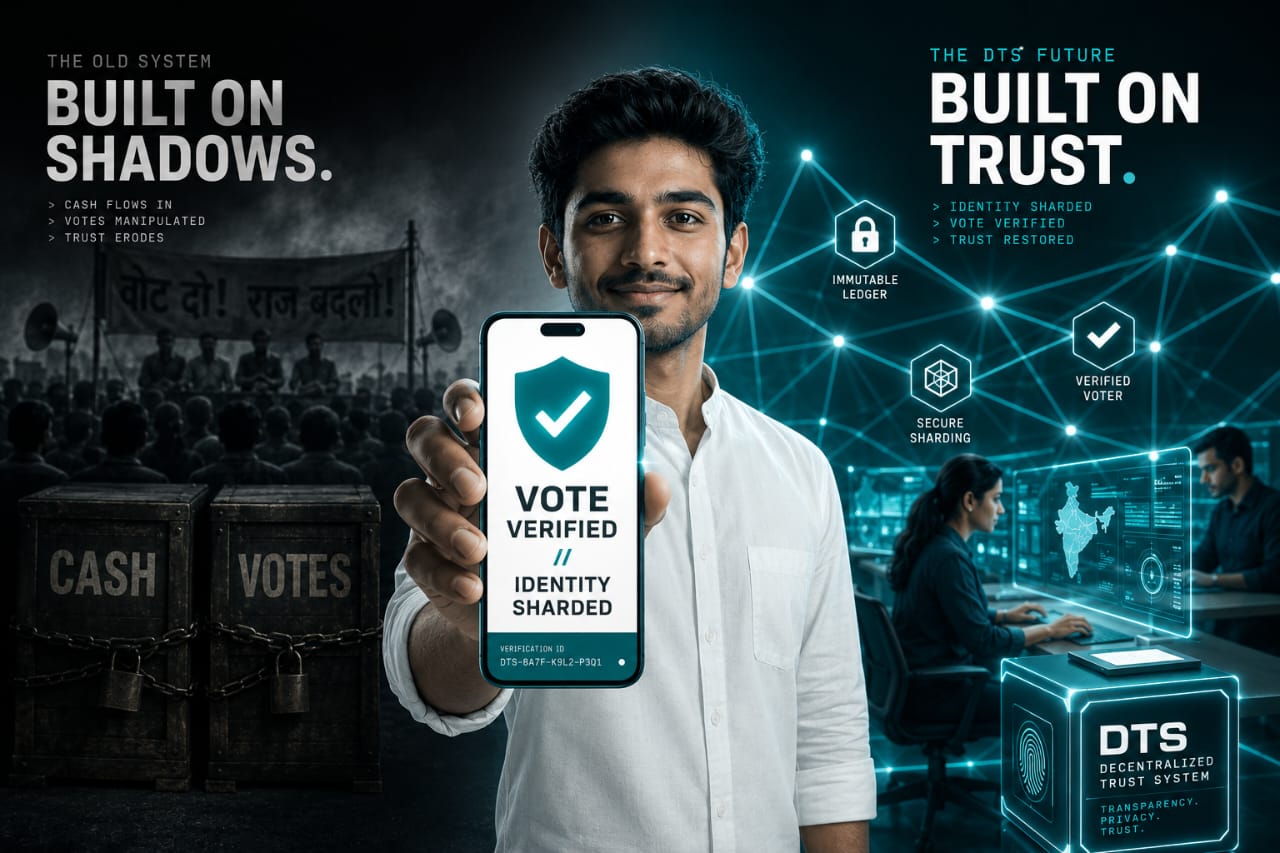

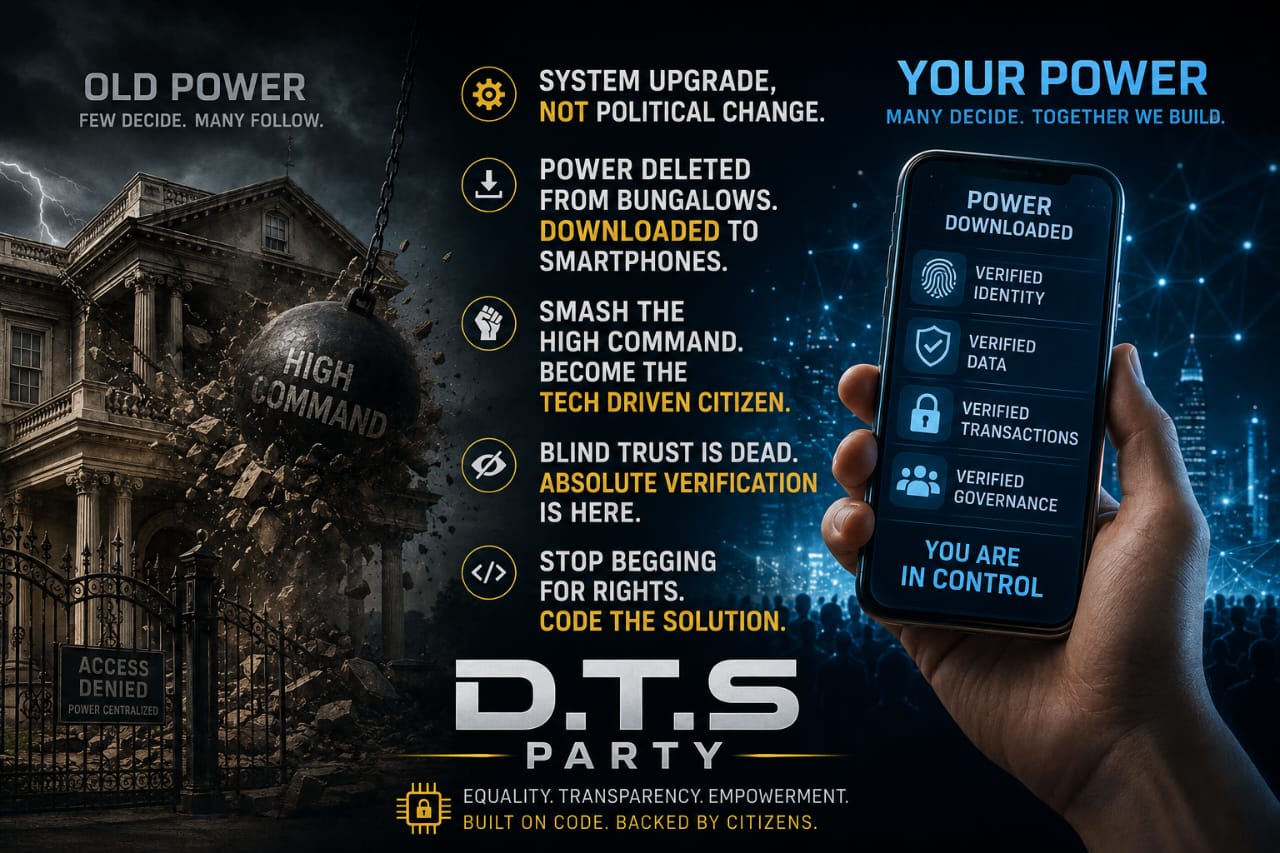
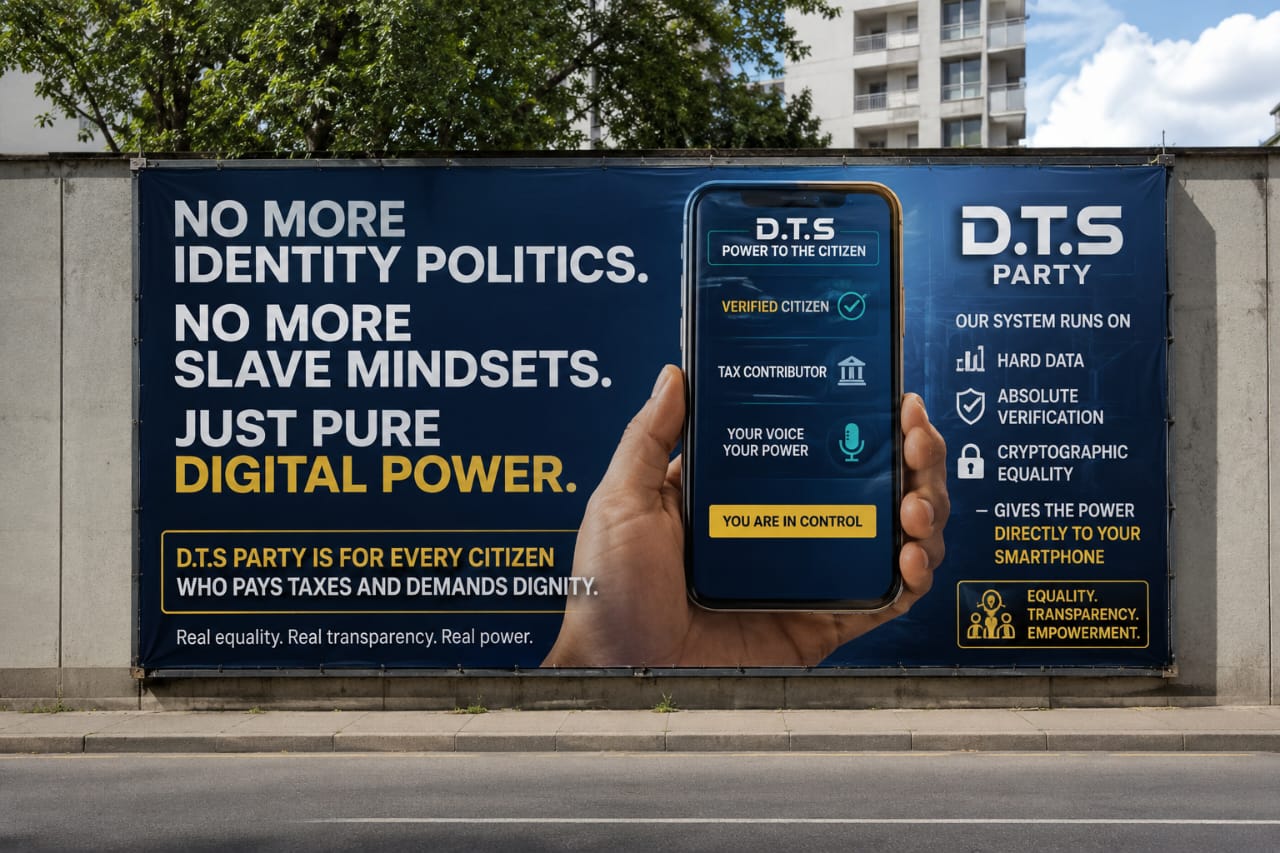
The decentralized Citizen Smartphone OS acts as the primary access portal for voters. It translates voting, grievance reporting, and service tracking into direct ledger entries, immediately bypassing paperwork.
With zero-knowledge cryptographic safeguards, citizens verify administrative expenditures, audit local projects, and communicate anonymous feedback directly to local agencies.
No bribes, no manual signatures, and no multi-month delay cycles. Under the DTS upgrade, treasury funds assigned to civic contracts remain locked in smart escrows.
Once contractors upload proof of work, the citizen inspects the physical results and signs off. Payouts are triggered instantly directly to contractor accounts.
System entries, ballot structures, and financial allocations are not stored on a single central server. Instead, data is synced across sharded nodes located at municipalities, taluks, and state capitals.
This decentralized network prevents data loss, halts outside administrative manipulation, and guarantees that the public ledger remains online 24/7.
Our shareholder models represent backing packages tied to physical state developments and micro-tariff operational fees.
Founding members gain direct access to allocation queues and receive audit-ready telemetry reporting, validating return trajectories through verified transaction flows.
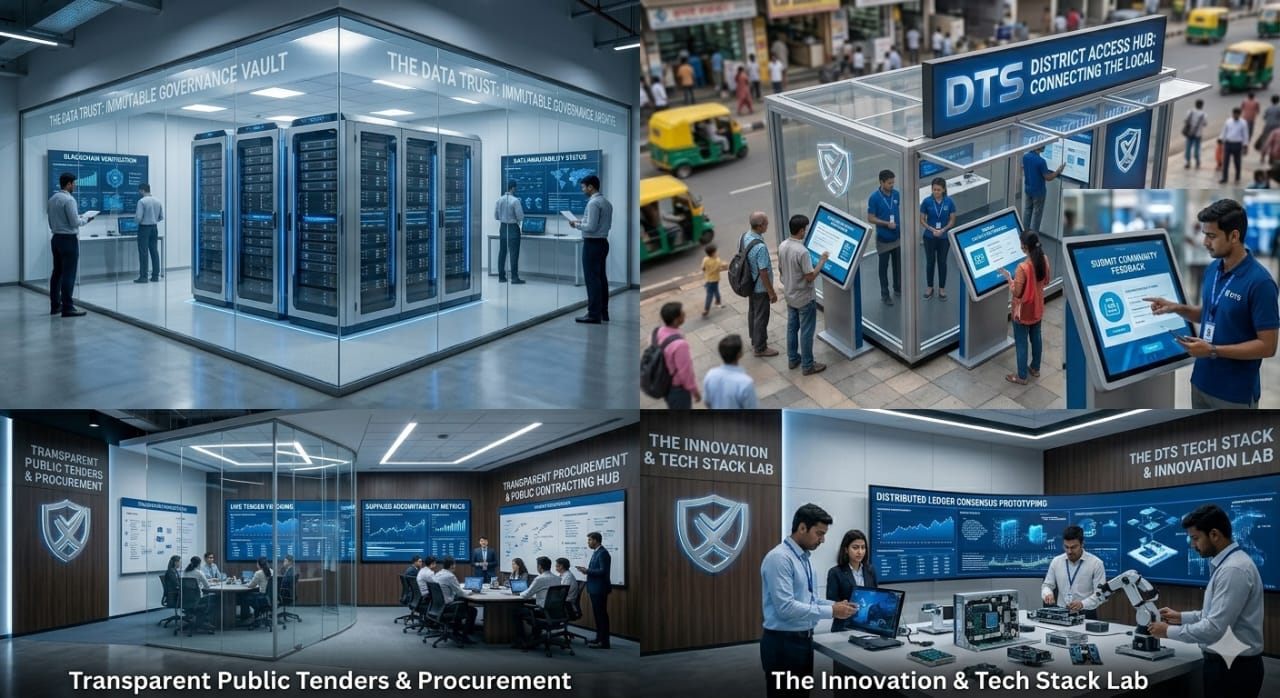
State executives and administrators monitor regional performance through real-time GIS telemetry mapping. Track queue loads, SLA countdowns, and active escrow payouts on a single command interface.
This transparent aggregation provides instant visibility, making it easy to identify delays and deploy resources directly to the coordinates that need support.
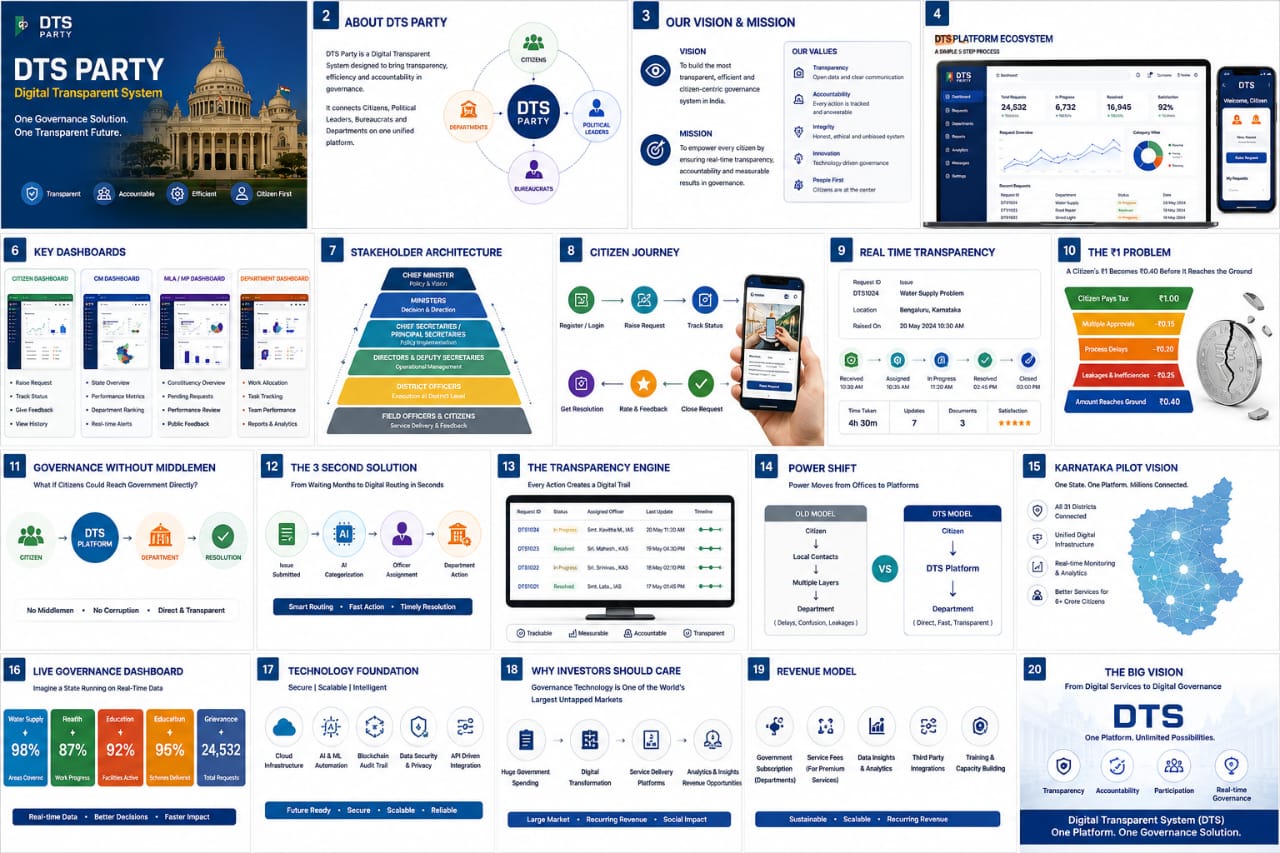
Traditional political systems lose up to 60% of taxpayers' value to paper approvals, signature bottlenecks, and manual inspections.
By introducing automated consensus triggers and cryptographic voting OS interfaces, DTS eliminates middlemen overhead and delivers 99%+ value directly to local services.

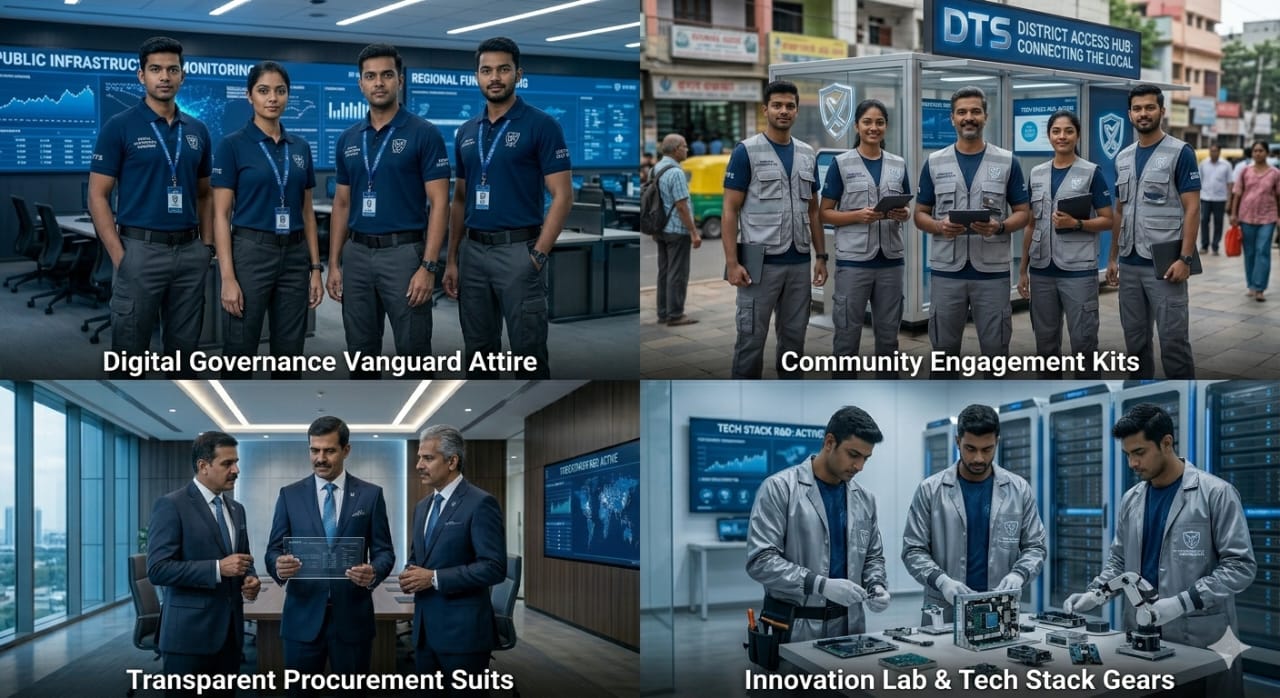
Our phased scaling path coordinates district-wide volunteers, taluk coordinators, and district leaders on a single progression ladder.
From initial municipal pilot runs to multi-state federated ledgers, DTS scales securely, ensuring database sync integrity is maintained across all district networks.
Emerging markets require software infrastructure that scales instantly. We utilize the robust national rails of digital identity and instant banking (Aadhaar & UPI).
By deploying cloud-based PaaS ledgers across municipal corporations and local panchayats, DTS establishes an efficient economic operating layer for millions of citizens.

A unified operating layer resolving the fundamental trust deficit in modern governance models.
Every transaction, infrastructure payout, and community budget line item is stored in read-only public registers. No secret ledgers, no hidden bonds.
Citizen requests, benefit transfers, and agricultural relief are resolved with cryptographic identity proof in less than 3 seconds—excluding middlemen delays.
Transition from candidate inheritance networks to transparent, objective merit-based hiring and resource selection platforms.